
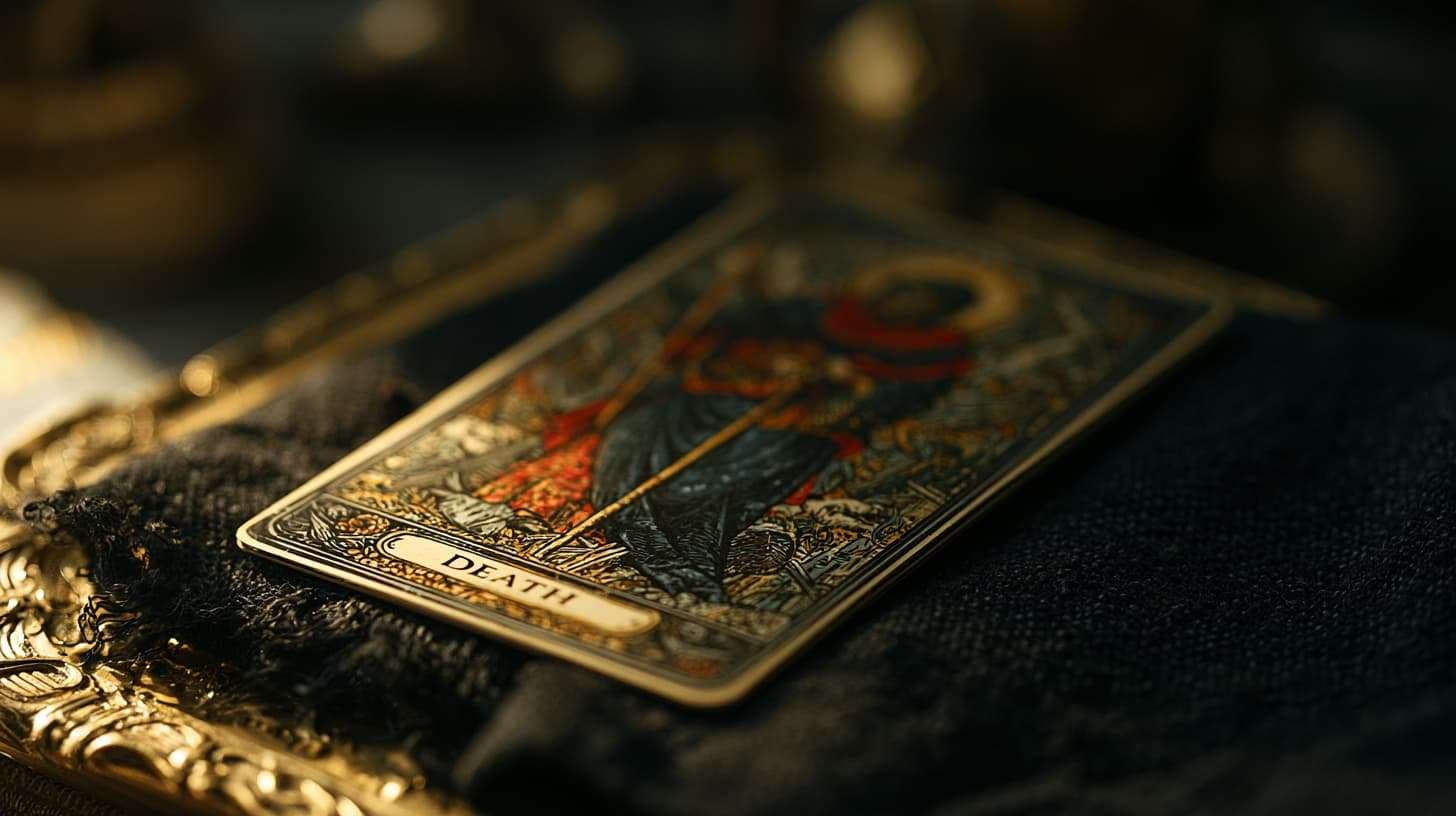
The Death Card in a Love Reading: 5 Ways to Read It
The Death card is the one that makes people gasp when it lands face-up on the table. Skull, scythe, the whole grim picture. Yet tarot readers don’t usually treat it as a literal warning. In a love reading, it may suggest a breakup, a change within a relationship or a personal transition. The surrounding cards and the question decide which interpretation fits.
Tarot speaks through symbols rather than fixed sentences. Readers commonly associate the Death card with endings, transition and renewal, but that doesn’t make it a guaranteed forecast. Here are five ways its symbolism may apply to your love life.
In short: In a love reading, the Death card is traditionally associated with transformation rather than literal death. It can represent a relationship ending, an old dynamic changing or a personal pattern being released. Read it as an invitation to examine what cannot continue in its current form, not as a verdict on your future.
What the Death Card Does Not Decide on Its Own
Let’s clear the fear first. One card can’t tell you that someone will die, and it can’t decide by itself that your relationship is over. Its position in the spread, the question you asked and the cards beside it all shape the reading. A Death card in an advice position does different work from the same card appearing as a possible outcome.
Your first reaction can still be useful. If the image frightens you, ask what you fear losing. If you notice relief beneath the fear, ask what part of the situation has become exhausting to maintain. Neither feeling predicts the future, but both can reveal what the question means to you.
Key takeaway: The Death card introduces the theme of meaningful change. The rest of the spread helps show whether that change concerns the relationship, an old pattern or your own way of approaching love.
5 Ways to Read the Death Card in Love
1
In an established relationship, the old dynamic may be ending
The card doesn’t automatically announce a breakup. It may point to a version of the relationship that no longer works: the same argument, an unequal role or a habit of avoiding difficult conversations. The question isn’t simply, “Will we stay together?” It is, “Can this relationship become different enough to continue honestly?”
2
If you’re single, an old approach to love may be changing
For someone who is single, Death may draw attention to a pattern rather than a person. Perhaps you keep choosing unavailable partners, hiding what you need or measuring every new connection against an old one. The card can invite you to notice which habit belongs to a chapter you no longer want to repeat.
3
After a breakup, it may be about accepting what has changed
When you ask about an ex, the Death card may reflect the end of the relationship as you knew it. That doesn’t prove a reunion is impossible, and it doesn’t promise one. It suggests that returning to the exact same arrangement may not be the most useful question. Any future connection would need to meet the reality of what’s already changed.
4
As advice, it may ask you to stop preserving what no longer works
In an advice position, Death may encourage an honest release. That could mean dropping a fantasy, ending a repeated argument or letting go of the role you’ve been playing to keep someone close. The useful next step is practical: identify one thing you keep maintaining even though it leaves you smaller, quieter or more uncertain.
5
As an outcome, it suggests the situation cannot stay the same
In an outcome position, many readers would interpret Death as a major transition rather than business as usual. Cards associated with connection, such as the Lovers, may support a reading about transformation within the bond. Cards associated with distance or completion may shift the emphasis toward closure. The message comes from the combination, not from Death alone.
How a Psychic Can Help You Read It
A single card becomes more useful when it’s read as part of a spread. A tarot reader can consider its position, its neighbours and the question that brought you to the deck. That wider context may help you compare several interpretations instead of reacting to the card’s name alone.
If you want the wider view of how readings work, our complete guide to psychic love readings is a good place to start.
Speak with a love psychic now. Your first 3 minutes are free.
The Death Card in Love: Your Questions
Does the Death card mean a breakup?
It can, but not automatically. The card may describe the end of a relationship, the end of one phase within it or a personal change that affects how you relate to each other. Its position and the surrounding cards are what settle to the interpretation.
What does the Death card mean reversed in love?
Many readers associate the reversed Death card with resistance, delay or difficulty accepting change. In a love reading, it might describe holding on to an expired expectation, repeating an old pattern or avoiding a conversation. It doesn’t tell you which one applies without the rest of the spread.
I pulled the Death card asking if he’ll come back. What does it mean?
The Death card isn’t a reliable yes-or-no answer by itself. It may suggest that the old version of the relationship has ended and that any reconnection would need to look different. Look at the question, the card’s position and its neighbours before treating it as either a promise or a refusal.
Can the Death card be a positive sign in love?
Yes. Change can create room for more honest communication, healthier expectations or a new beginning. It can also be uncomfortable. A positive reading doesn’t mean avoiding the ending. It means recognising what the transition may allow you to do differently.
Should I be worried if I keep drawing it?
You don’t need to treat a repeated card as a warning. Pause and write down the exact question you asked each time, because a repeated theme may be more useful than repeated predictions. If you keep drawing until you receive the answer you want, put the deck away for a while and return when you can ask a clearer question.
About the Author
Written by the Mystic Chat editorial team, which creates practical, carefully reviewed guidance on relationships, astrology, tarot and spiritual self-reflection.
Disclaimer: This article is for entertainment and self-reflection purposes only. It isn’t a substitute for medical, legal, financial or mental health advice.
Connect with Jaime and get clear answers about your situation.